

Automated Honey Bee Bivouac Detection
From Swarm Detection to Swarm Recovery
A University of Montana Master Beekeeping Capstone Research Project
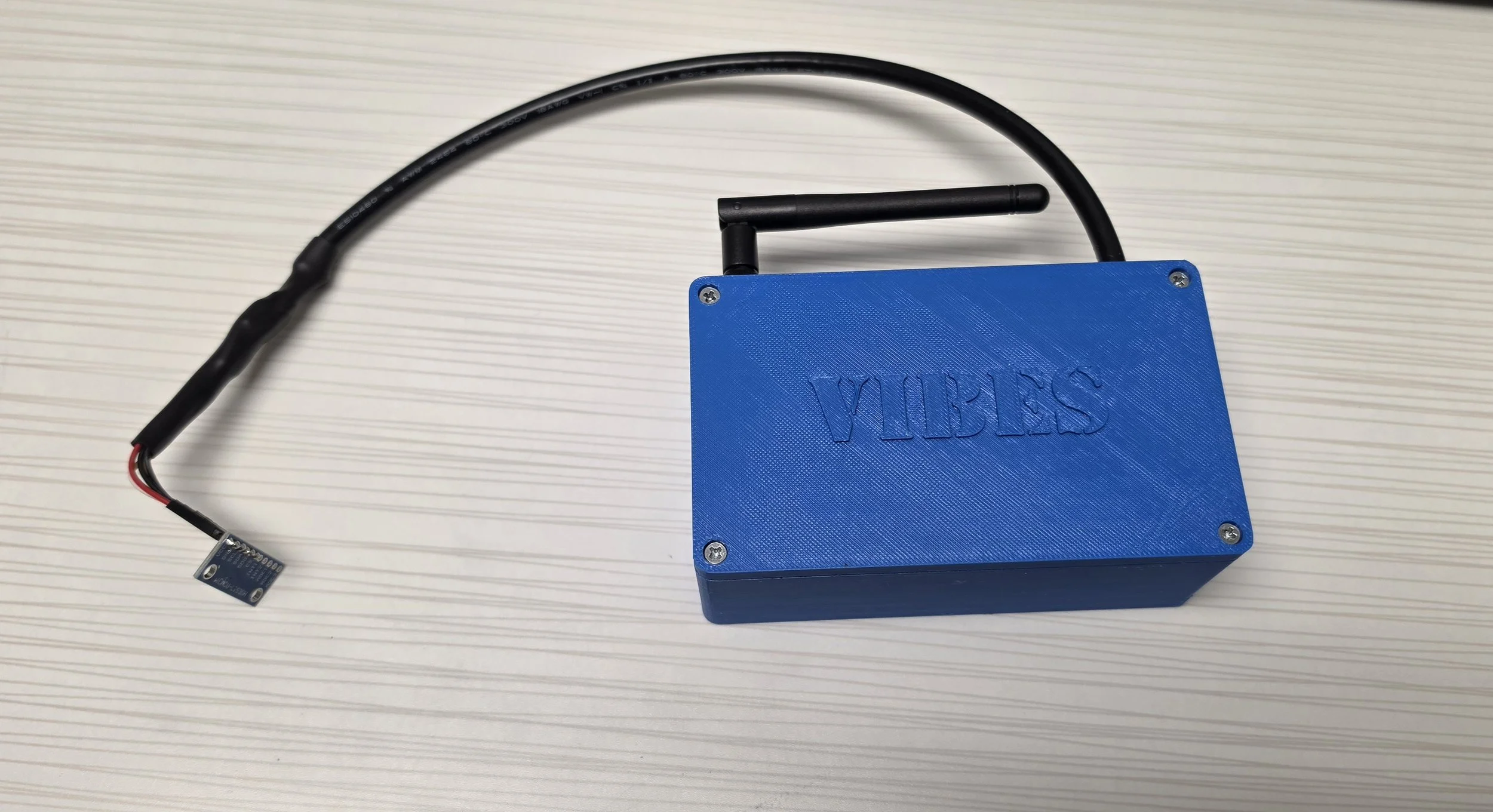
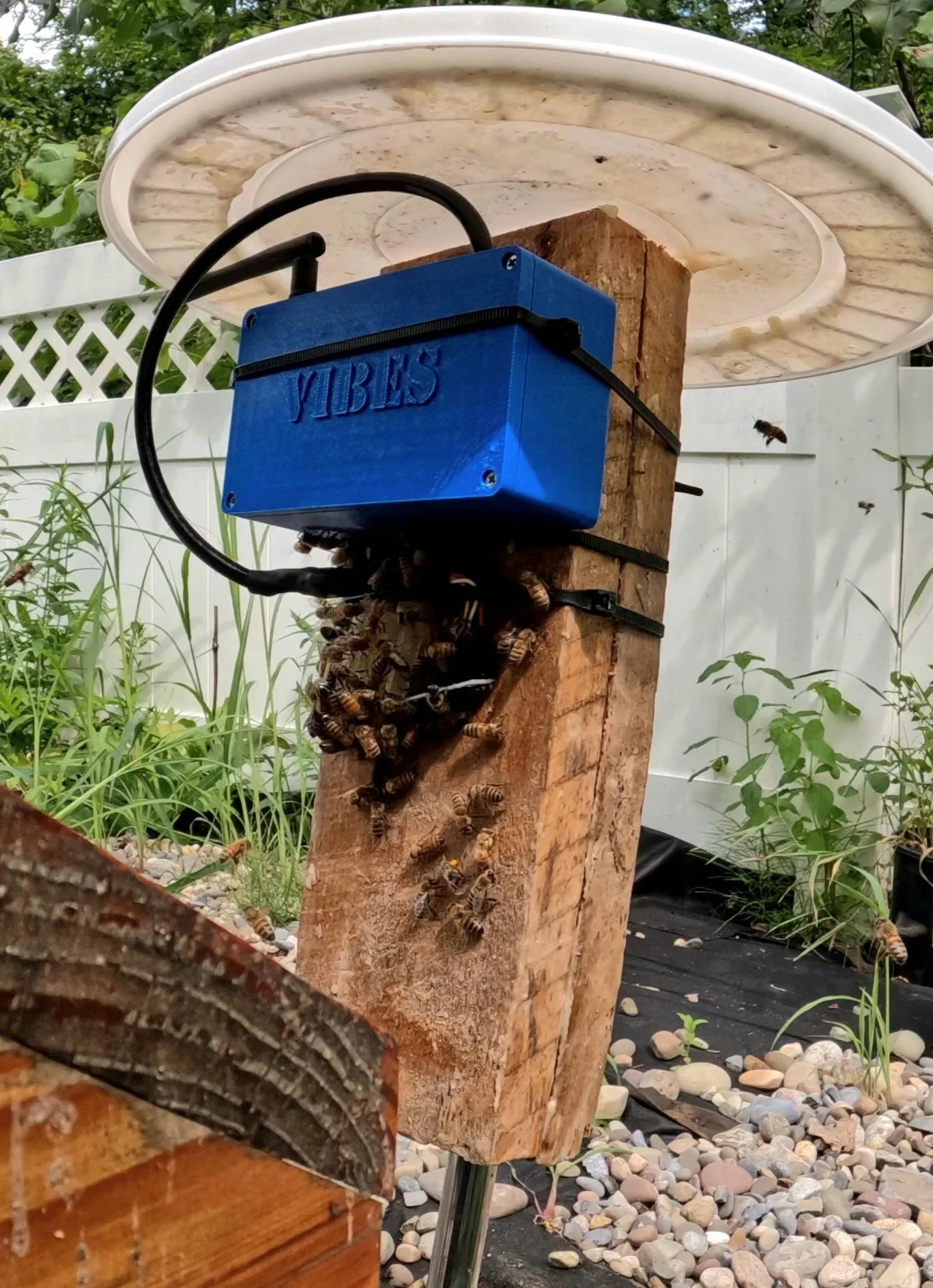
The Problem
A Swarm Can Be Gone Before You Know It Was There
When a honey bee colony swarms, thousands of workers and the queen leave their original colony. The swarm commonly forms a temporary cluster, a bivouac, while scout bees search for a suitable permanent home.
For the beekeeper, this creates a narrow window of opportunity.
If the swarm is discovered while bivouacked, it may be relatively easy to recover. If it isn't discovered in time, the bees may depart for their selected nest site.
The traditional solution requires something surprisingly old-fashioned:
The beekeeper has to be there to see it.
What if technology could change that?

The Vision
What If Your Apiary Could Tell You What Just Happened?
Imagine a future apiary in which each colony and swarm-recovery device becomes part of a connected monitoring network.
STEP 1 — DETECT
A hive-mounted sensor detects changes in colony vibration associated with swarm preparation or departure.
Your phone alerts:
Possible swarm event detected.
STEP 2 — IDENTIFY
Because each hive has its own sensor, the monitoring system associates the event with a particular colony.
Possible source colony: Hive 7
STEP 3 — LOCATE
An instrumented Russian Scion detects a newly formed cluster.
Bivouac detected — Scion 2 occupied
STEP 4 — RECOVER
The beekeeper now knows that a swarm event occurred, which colony may have produced it, and where a recoverable cluster has been detected.
Instead of searching trees and hoping to find the swarm:
The apiary tells the beekeeper where to look.
That is the long-term vision.
This capstone project asks whether we can begin building one of the critical pieces necessary to make it possible.